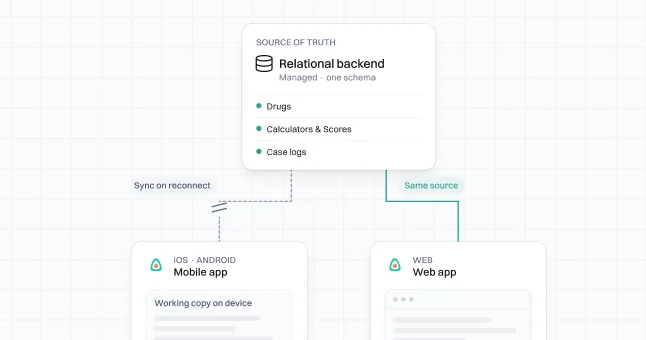
01AI audit & strategy
Review workflows, data, and existing tools. Prioritise opportunities by practical value and feasibility, with a clear recommendation for what to test first.
Cookies
We use analytics cookies to see how the site is used. No ads, and nothing is sold. Privacy policy
Every card on this board can be moved. Press Space or Enter to pick one up, move it with the arrow keys, then press Space or Enter to drop it, or Escape to cancel. Otherwise the arrow keys move between cards.
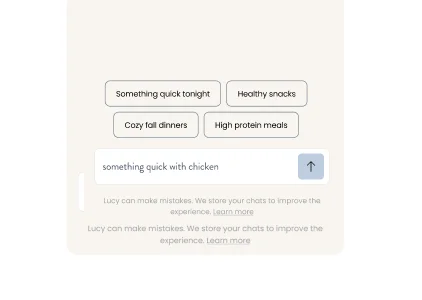
 Fraîche Table — Ask LucyFraîche Table — Ask Lucy
 LucyMeal-planning assistant inside the Fraîche Table appMeal-planning assistantRetrieveReasonRespond
 Fraîche Table — Meet LucyAI feature
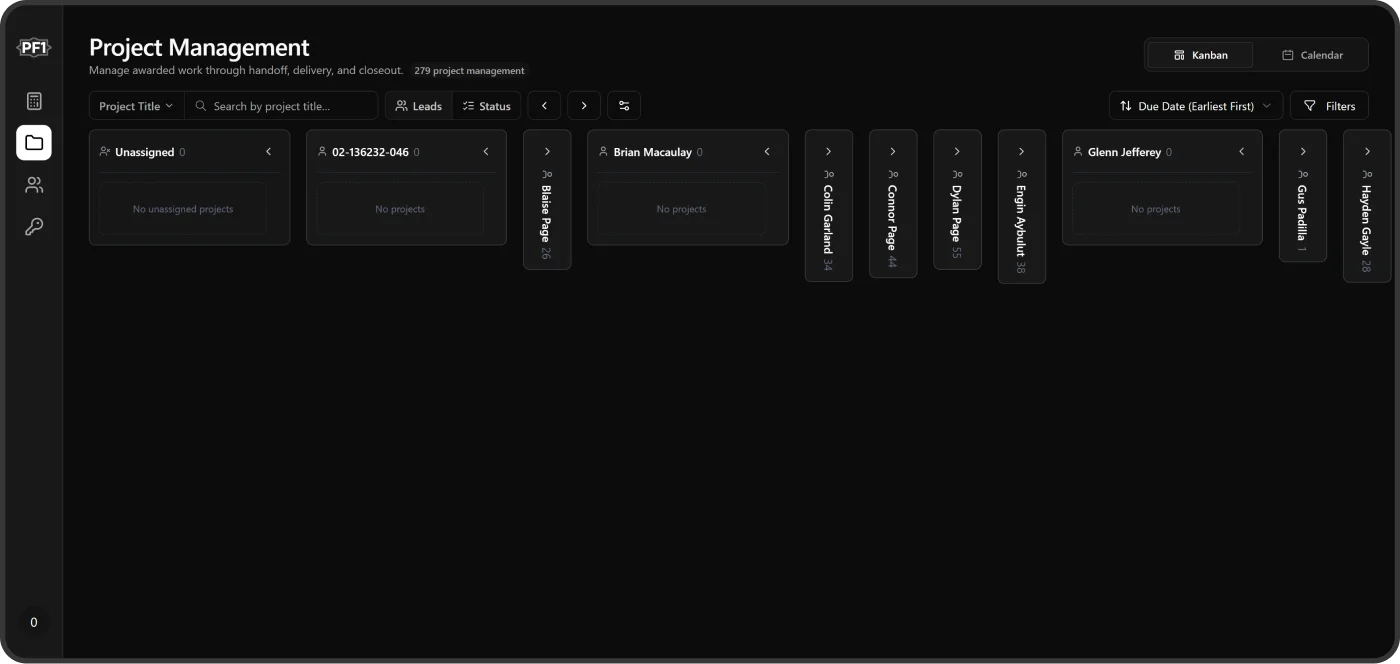 Page Flooring — project automationAutomation
Your team is spending time searching for answers, processing information, or repeating the same steps. You can see opportunities for AI, but need a clear way to choose, test, and put them into use.
Find the tasks where automation could save useful time.
Make approved information easier for staff or customers to find.
Turn the use case into a feature people can understand and use.
We help choose the right problem, connect the right information, and define how the solution should behave when it is uncertain.
Review workflows, data, and existing tools. Prioritise opportunities by practical value and feasibility, with a clear recommendation for what to test first.
Connect document processing, information extraction, and routine actions into your workflow, with checks and human review where the task needs them.
Build assistants that use approved knowledge and tools to answer questions or complete defined tasks. Give them clear permissions, limits, and routes to a person.
Add capabilities such as guided planning, search, and recommendations to your product. Design the surrounding experience so users know what the feature can do.

Help your team use AI in everyday work through practical workflows, guidance, and training built around their roles and tools.
Drag a phase, or focus it and use the left and right arrow keys, to move it along the timeline.
A typical 10-week AI pilot
Start with one task, prove it on real cases, then build from there.
10weeks, use case to integration
We understand the workflow and agree on the improvement worth pursuing.
We review data access, permissions, integrations, and the situations the solution needs to handle.
We test a focused version against representative tasks, checking usefulness, errors, and the need for human review.
We bring it into the working experience and use feedback, performance, and cost to guide the next iteration.
We agree on what improvement looks like before building: less time on a task, fewer corrections, more completed workflows, or faster access to the right information. Those measures help decide whether to expand, adjust, or stop.
“Having had the pleasure to deal with the OpenCore Group for sometime now on multiple different projects and we have been very impressed by the teams seemingly 24/7 availability, unmatched collaboration and quality of work. We will be continuing to work with them on future projects.”

Steve P.
Owner, Taurus Contracting“Working with OpenCore has been extraordinary, they excel in everything from challenging backend tasks to user-focused design. Their dedication guarantees exceptional quality and value, playing a pivotal role in Efundrs' success.”

Jaxon H.
CEO, eFundrs“OpenCore transformed our complex meal planning vision into a scalable platform, delivering seamless user experiences and supporting sustainable business growth”

Tori W.
Founder, Fraîche Table“This is a very professional company that meets deadlines, exceeds expectations and I highly recommend OpenCore for all your web and design needs!”

Carolyn L.
Owner, Eclectic Events“[OpenCore Group] is a talented, motivated, professional team and has simply been a pleasure to work with.”

Dr. Sanjib Adhikar
Founder, Anesthesia One“Very knowledgeable team! I must say from the start of our dealings right up until the end - I was thoroughly impressed with their communication, efficiency and ability to listen to our needs and translate that into a finished product! Highly recommend using OpenCore!”

Dylan P.
Director, Page Flooring“We couldn’t be happier with the OpenCore Group! They made the entire process so easy and delivered a very professional and functional website that exceeded all our expectations. Highly highly highly recommend!”

Hazel S.
Founder, DentiMatch
Didn't find the answer?
Book a call and let's have a chat.It depends on scope, but most website projects run four to eight weeks, and custom software projects typically run two to four months for a first version. We work in stages, so you're seeing real progress early rather than waiting for a big reveal at the end. Before we start, we'll give you a clear timeline with milestones — and because most of our clients work with us on a retainer, the launch date is usually a starting point rather than a finish line.
Didn't find the answer?
Book a call and let's have a chat.
