Five systems, three logins, and a dozen workarounds, replaced with one platform they own.
Page Flooring was paying prices for software that didn't do what their business does. We consolidated the whole stack into one piece of software built around their workflow – then gave the company a face that matched what it had become.

Page Flooring & Concrete Solutions
Commercial flooring & concrete
813 Brock Rd, Pickering, ON
Platform • Brand system • Website
One system of record, built for how flooring actually works.
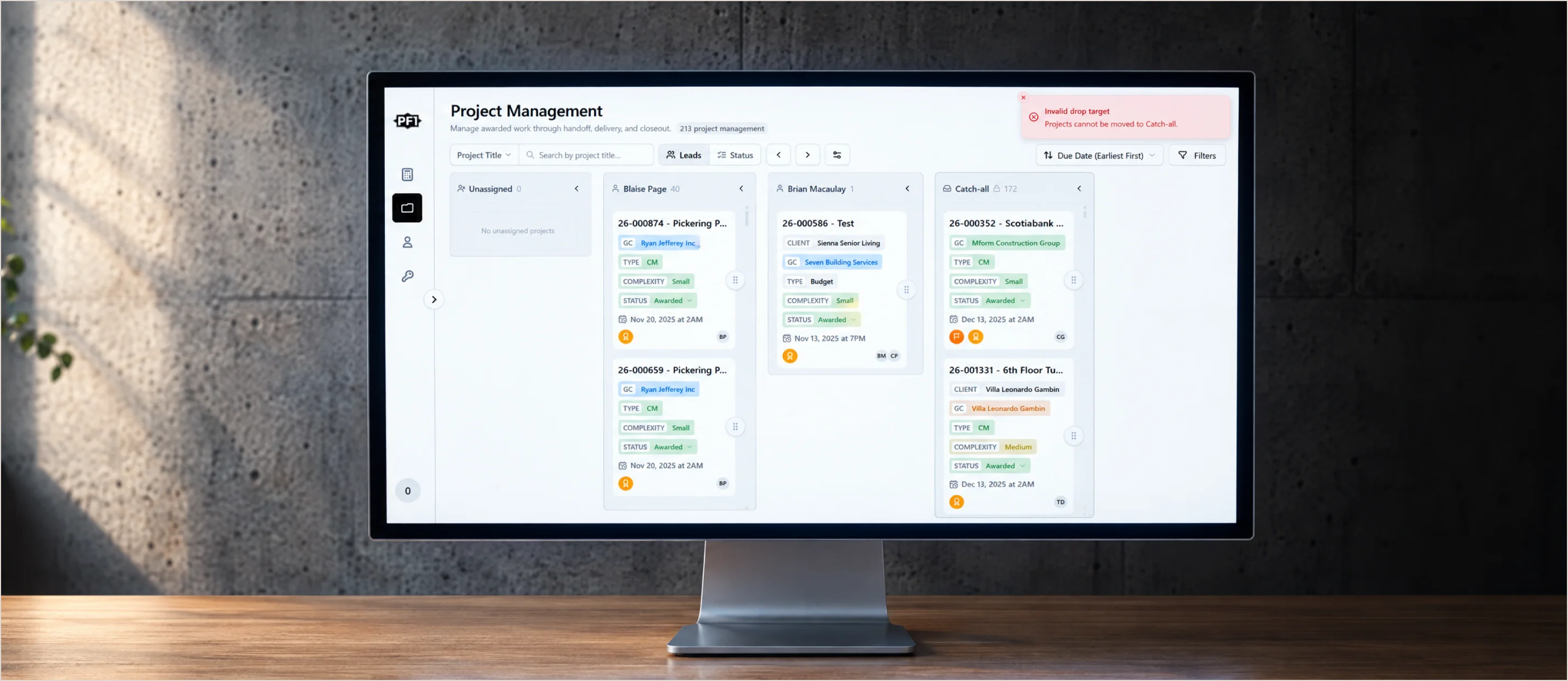
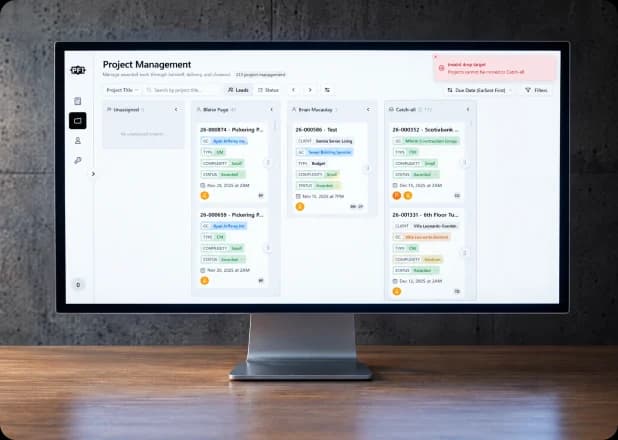
They came to us running the business across five systems that didn't talk to each other. We replaced the whole stack with one piece of software they own – with the financial layer integrated rather than reconciled.
One system of record
Projects, financials, and documents in one place instead of scattered across tools that don't talkTheir process, not a vendor’s
Features built for how flooring works: schedules of values, sample transmittals, change orders. No more workarounds bolted onto generic software.An asset on the balance sheet
Software the business owns and controls, and the data to go with it. That’s enterprise value, not an expense line.They were paying a premium for software that couldn't say yes.
Page Flooring ran on enterprise software, the real kind with the real price tag. When they asked for the small, specific things their business needed, the answer was no. Nothing was impossible; it just wasn't on the roadmap
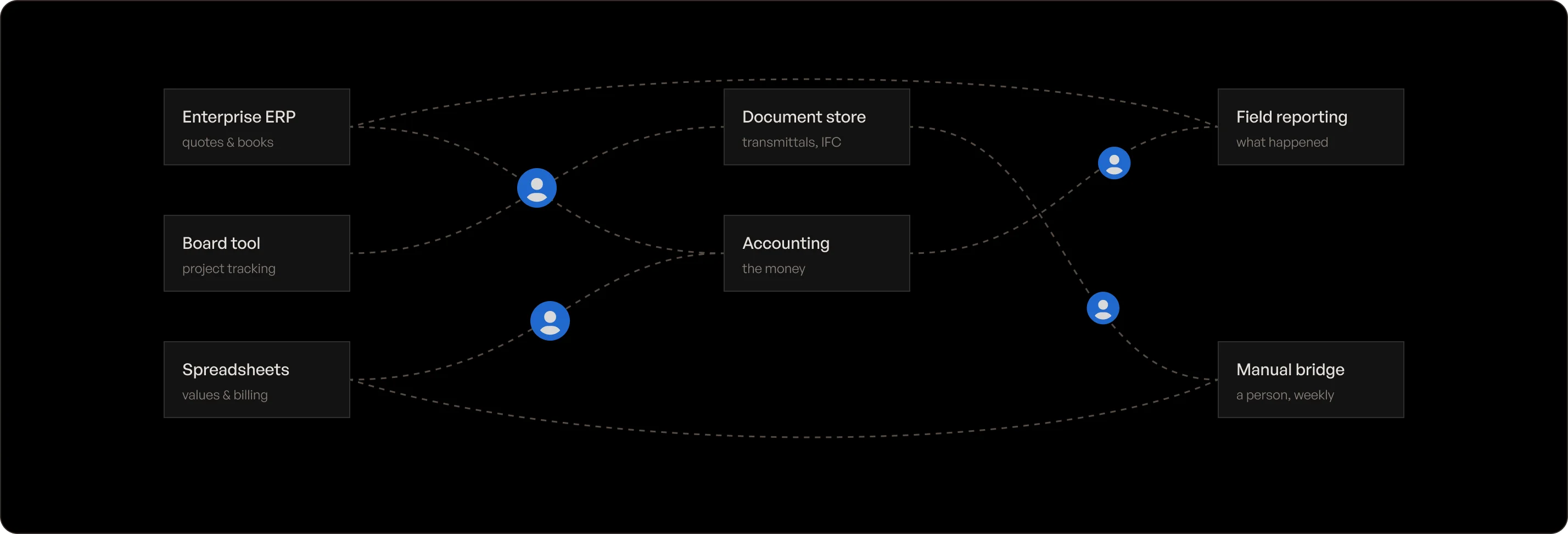
So they did what every capable operator does: they built around it. A board tool here because the main system couldn't track projects the way they work. A spreadsheet there. A manual process to bridge the gap between the system that holds the money and the system that holds the job. Each one was a smart fix. Together they became the problem.
Data lived in four places, which means it lived in none of them. Reconciling anything meant human. They were paying for multiple platforms, paying people to keep those platforms in sync, and still looking at building new things to fill the gaps left over. The workaround stack cost more than the software it was patching.
In this industry the gaps were in the most expensive place. The name of the game in the trades is paying and getting paid: purchase orders, bills of lading, schedule of values, progress billing, lead times on material ordered months before it's installed. It is transactional work that behaves like a service business, and generic project software doesn't understand any of it.
Very knowledgeable team! I must say from the start of our dealings right up until the end - I was thoroughly impressed with their communication, efficiency and ability to listen to our needs and translate that into a finished product! Highly recommend using OpenCore!
You can't design a better process until you understand the one they have.
The work started in their building.
On site, with their people
Our team sat with theirs across estimating, project management, accounting and the field, and with leadership. Different people, different truths.
Map what happens today.
Including every manual workaround built over the years to patch a gap. Those workarounds are documentation: each one marks where the old system failed.
Understand the history.
How they’ve always done it, and how they do it today. Those are rarely the same thing, and the difference tells you what’s essential and what’s leftover.
Build in their channel.
Shared chat, continuous feedback, functionality in front of them while it’s still cheap to change.
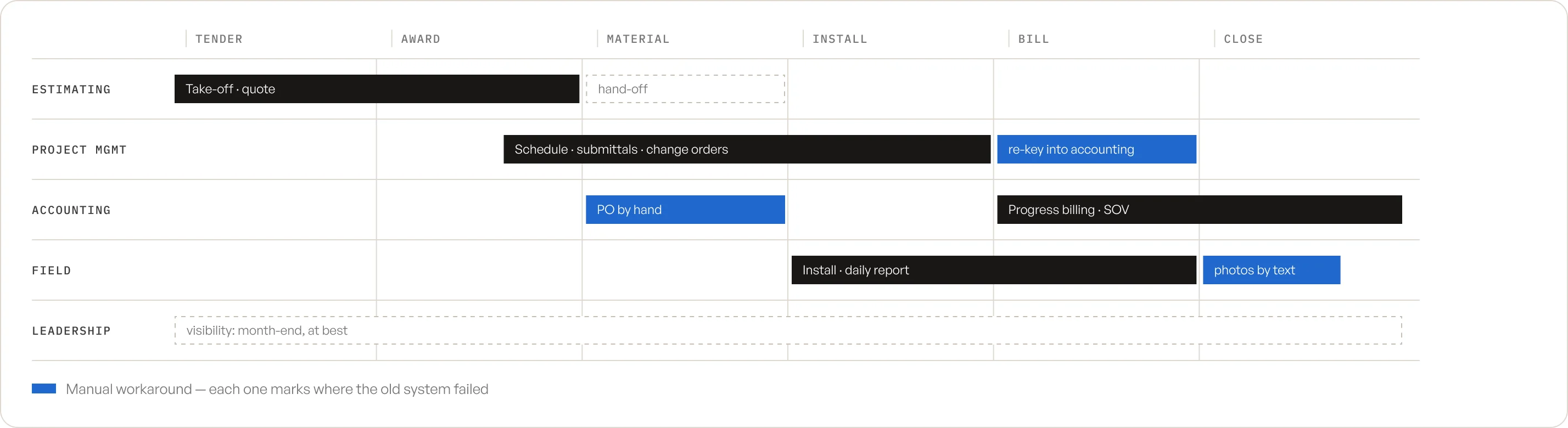
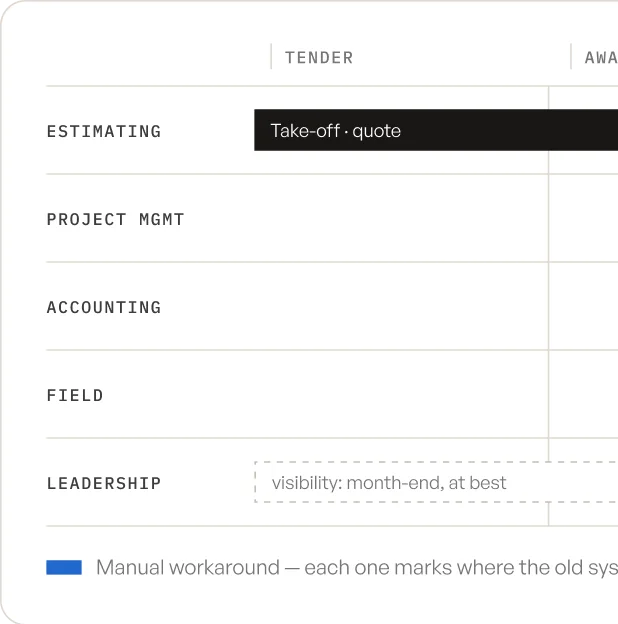
You cannot build an improved process if you don't understand the current one. Most software projects fail right here, before a line of code is written.
One platform, built around the way the work actually moves.
We took everything they were stitching together and built a single system they can scale, customize and control, with the financial layer integrated rather than reconciled.
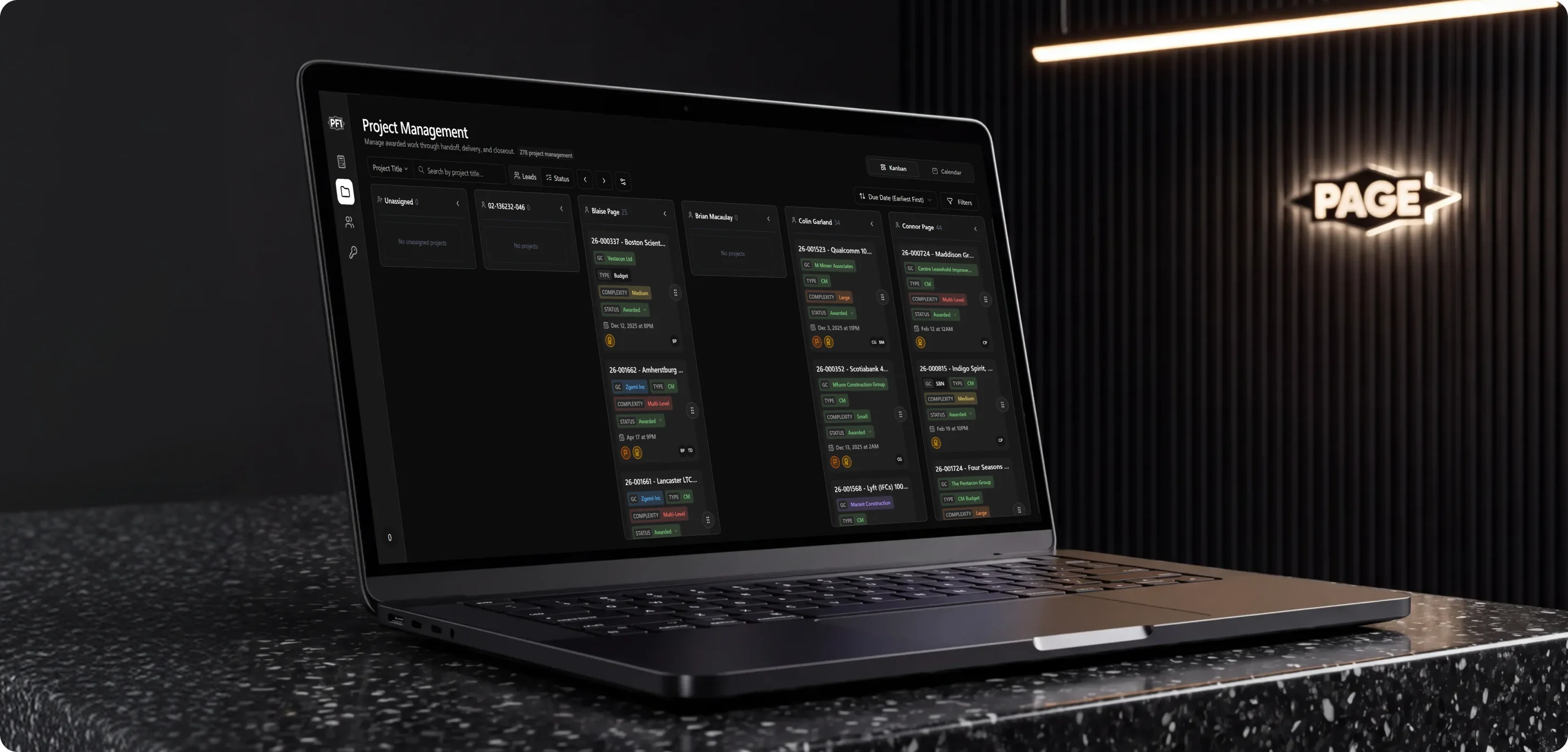
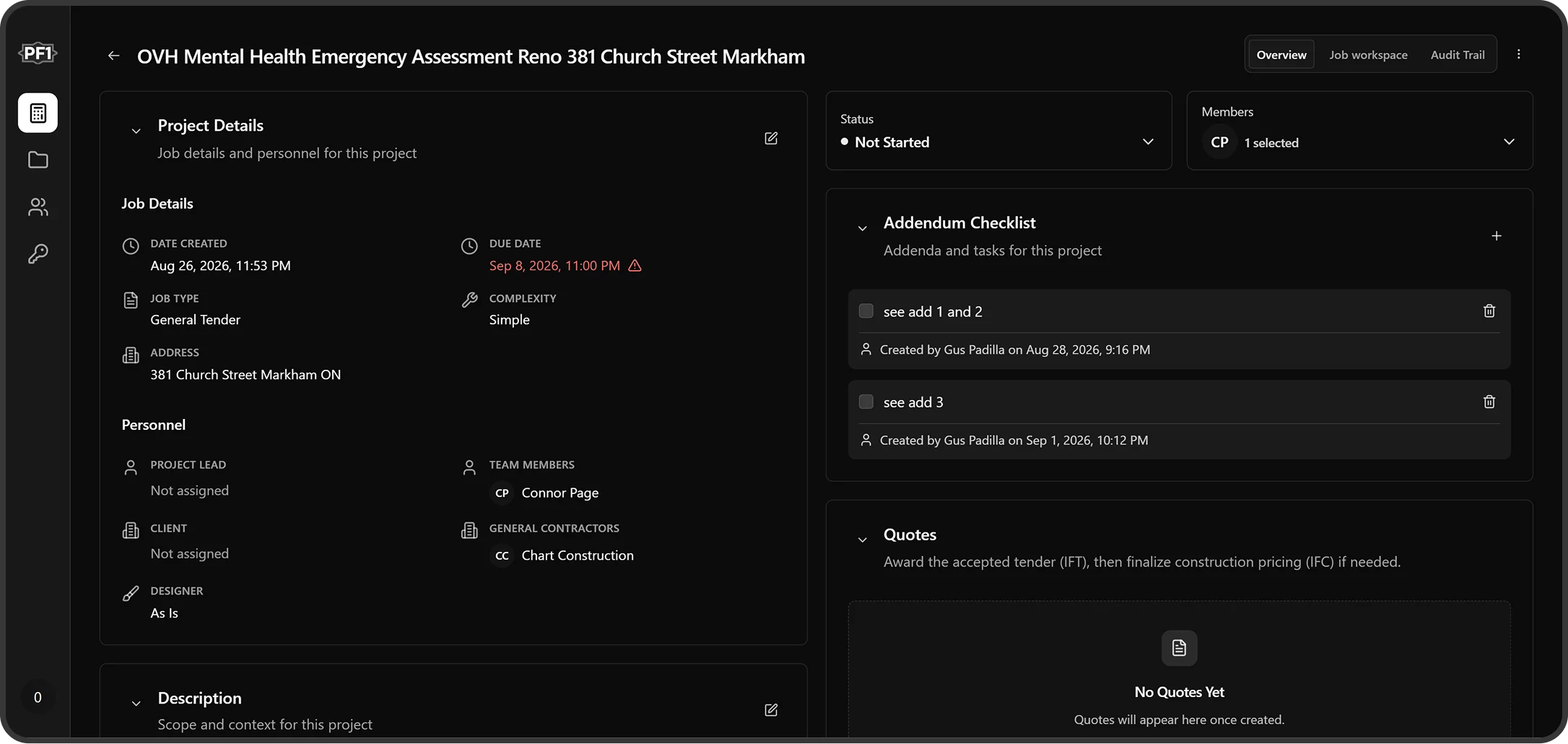
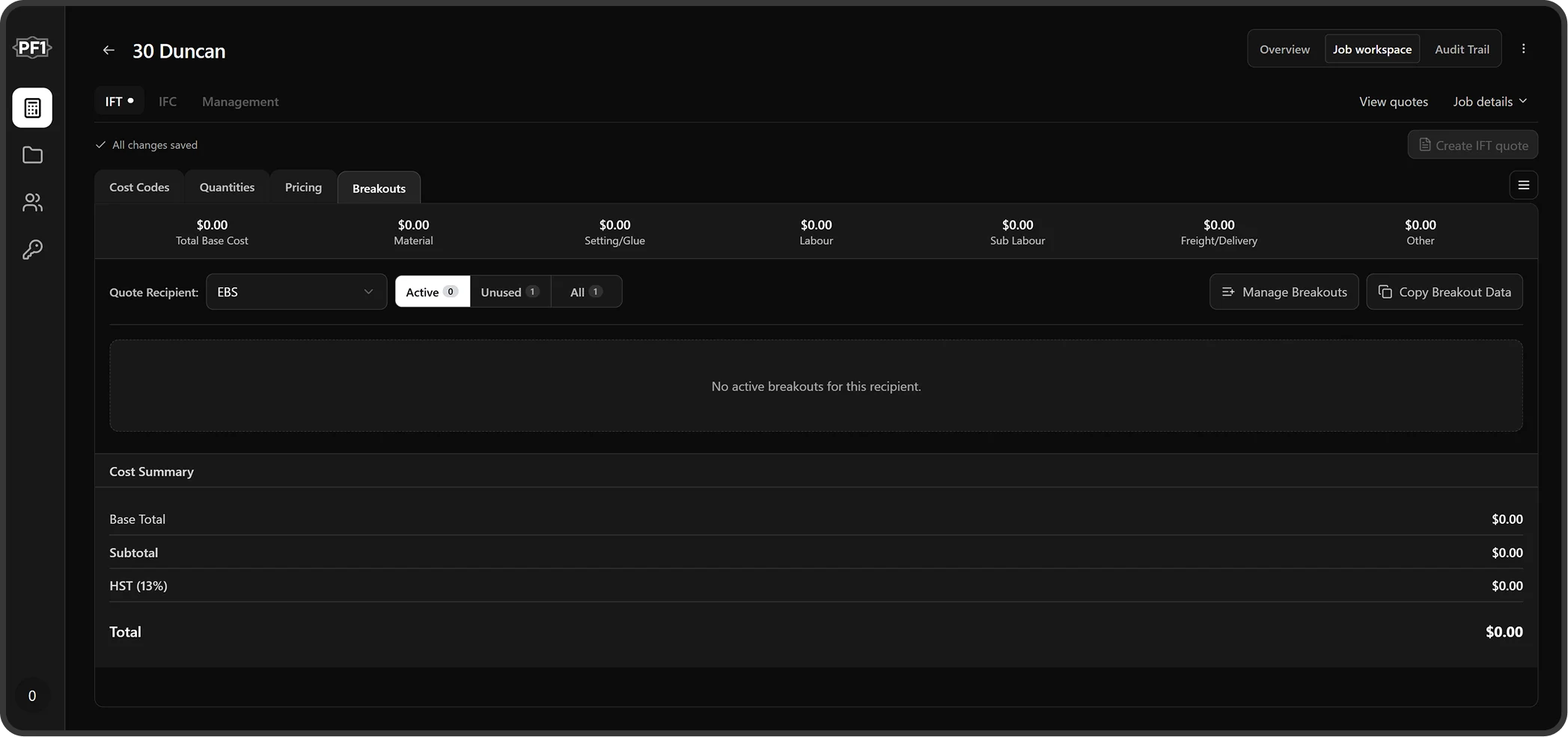
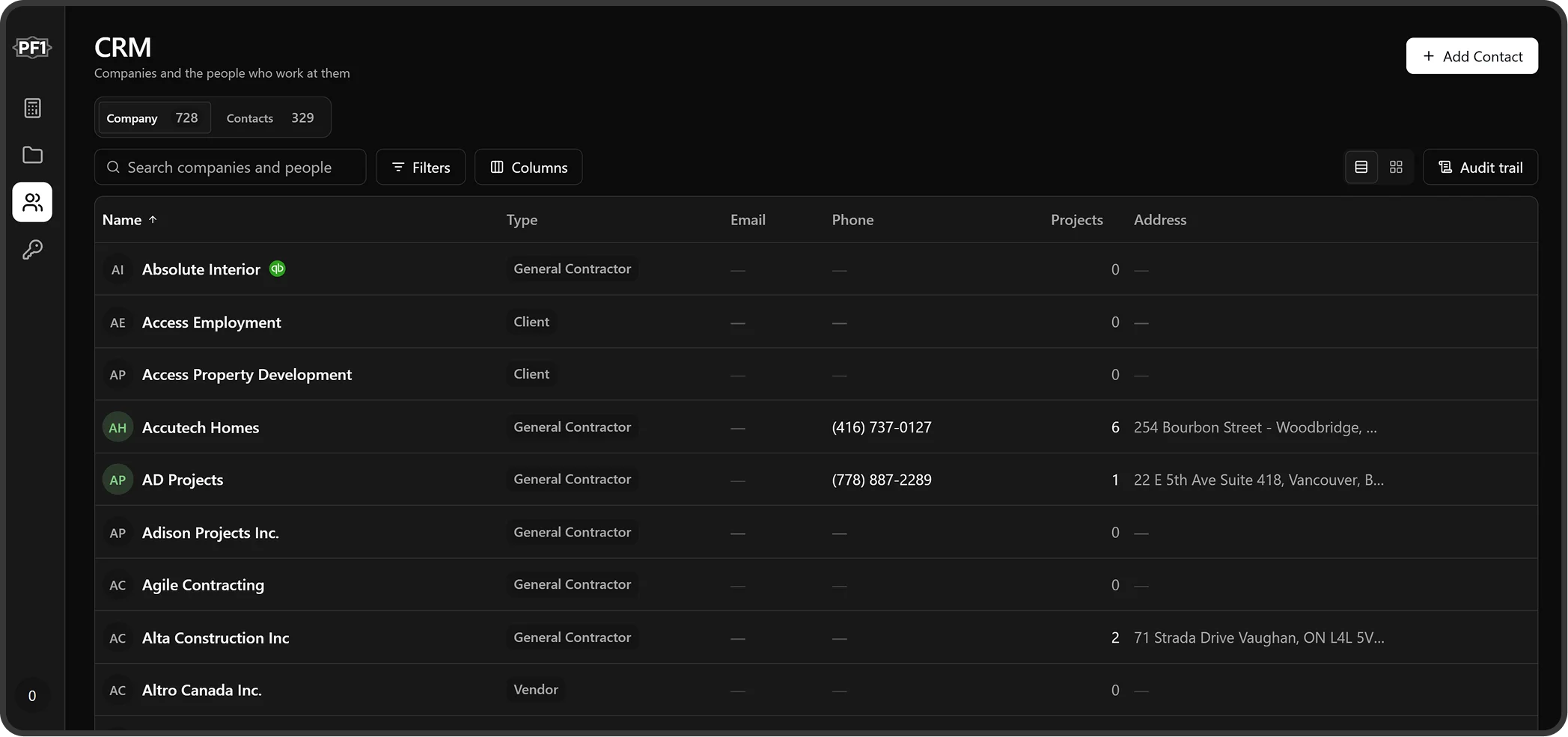
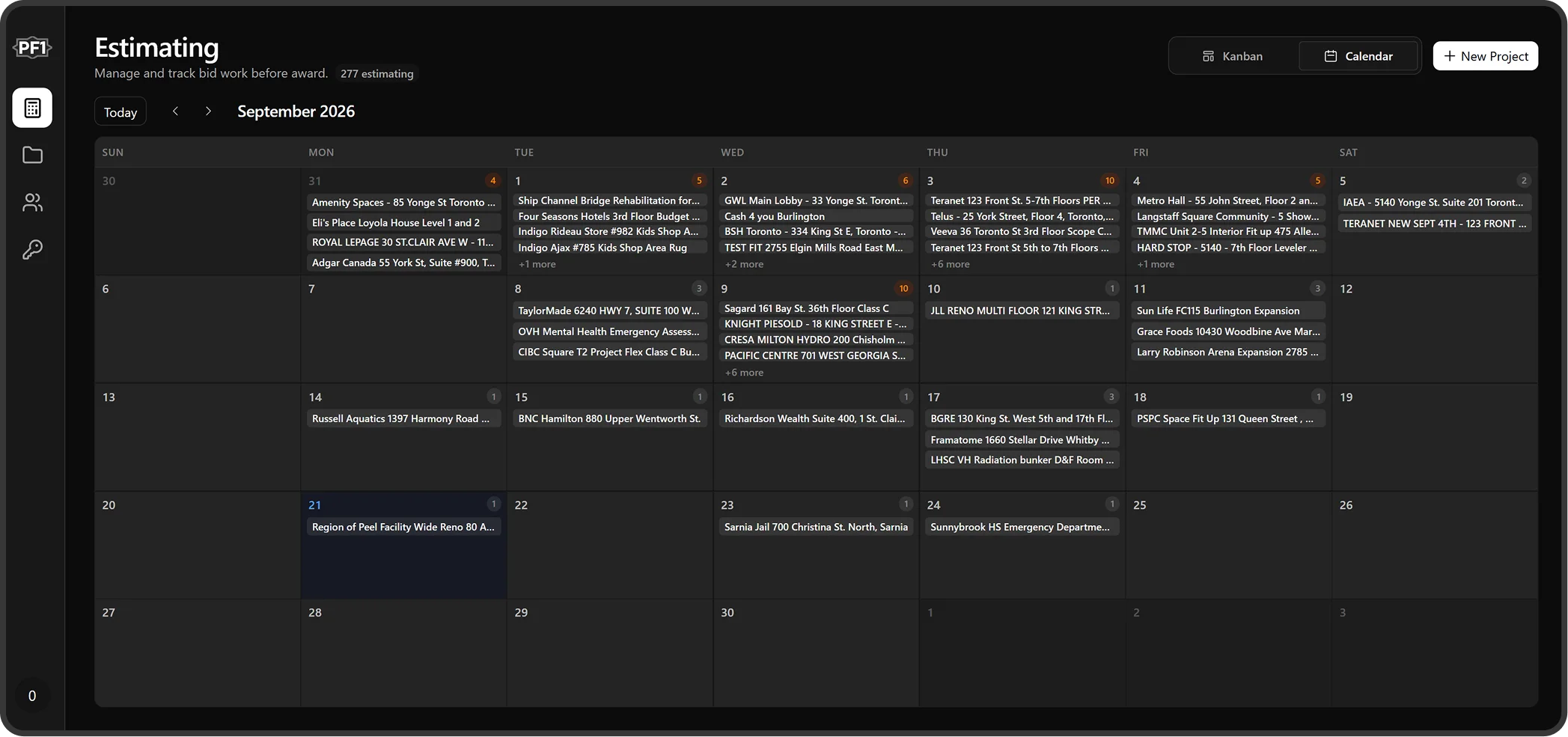
Schedule of Values
Progress billing that matches how the industry actually contracts, with two-stage locking so figures can’t move once they’re committed, and clean export for anyone who still needs it in a spreadsheet.
Financial integration
The accounting system stays the source of truth for the books, and the platform talks to it directly. Invoices, POs and progress billing stop being a re-typing exercise.
Sample transmittals, change orders, IFC drawings
The documents this trade runs on, built into the platform rather than attached to a generic task tool.
Role-based access and single sign-on
The field sees what the field needs. Finance sees what finance needs. One identity, tied to the systems they already use.
The data model in plain language. Connected records, not four exports
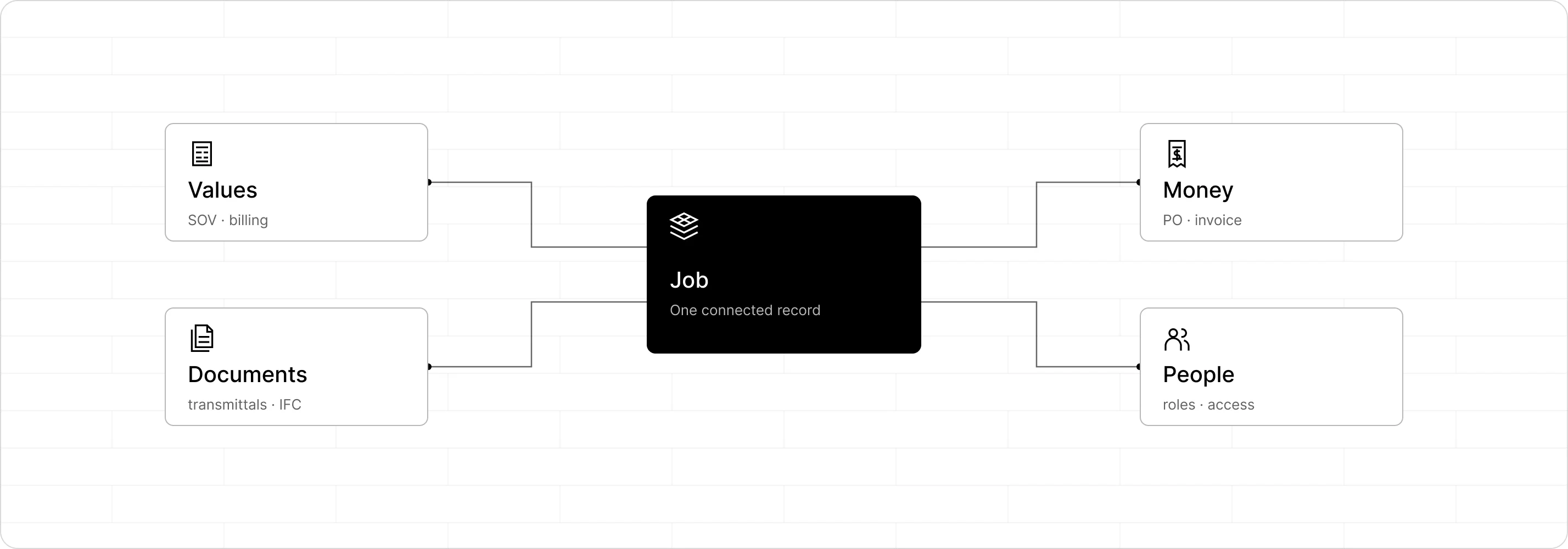
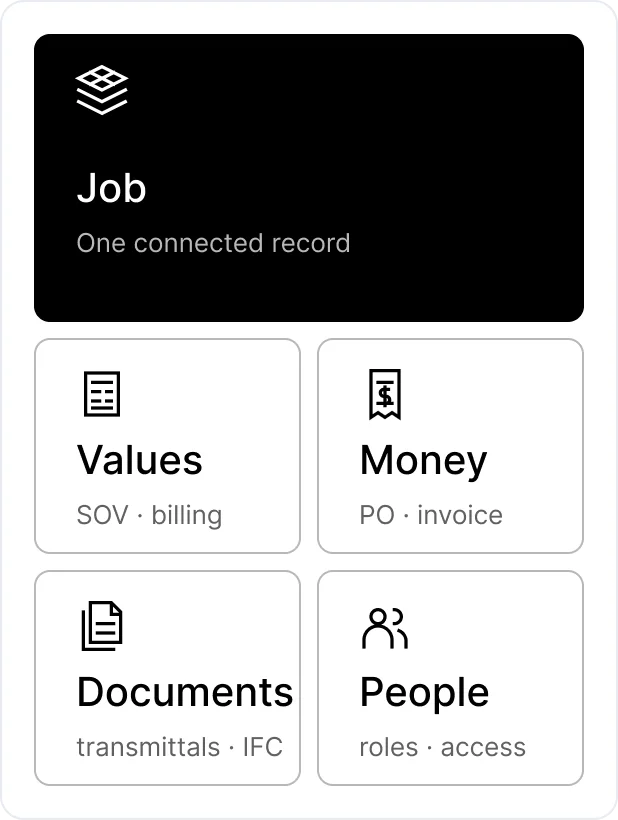
We stay deliberately non-specific about our stack in public. Naming every component of a client’s architecture is a security disclosure, not a portfolio piece.
